
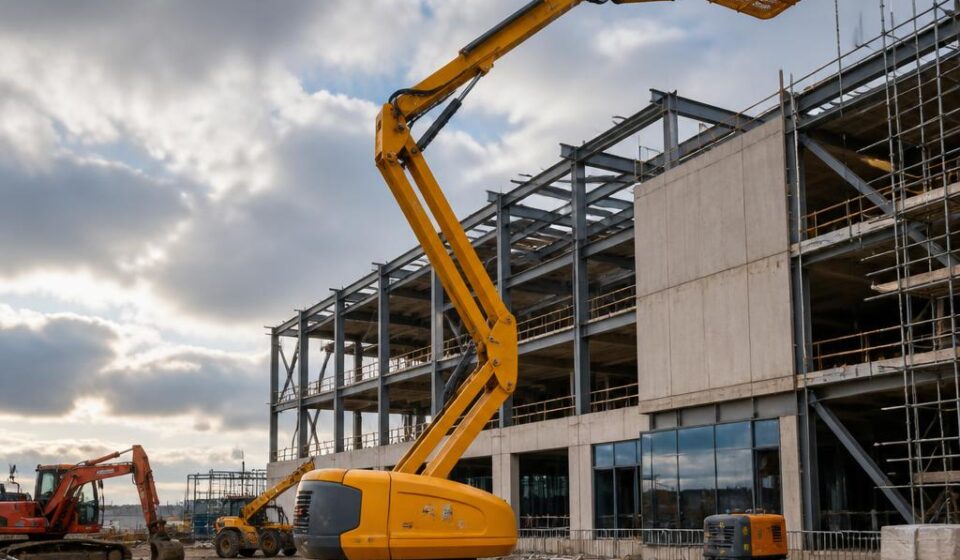

We’re looking at Aerial Work Platforms here. So, you’re ready to rent an AWP, but what are you actually looking at in the yard? There’s a whole fleet out there, each designed for specific tasks. You’ll find everything from compact units perfect for tight indoor spaces to massive machines that can reach incredible heights. This variety ensures you can always find the right tool for your project, no matter the scale.
Table of Contents
| Scissor Lifts | Great for vertical movement on flat, stable surfaces. Think indoor construction or maintenance. |
| Articulating Boom Lifts | Offer incredible reach up, over, and around obstacles. Perfect for complex outdoor jobs. |
| Telescopic Boom Lifts | Provide maximum horizontal and vertical reach. Ideal for jobs requiring straight-line extension. |
| Personnel Lifts (Vertical Mast Lifts) | Compact and lightweight, designed for one or two people to reach overhead tasks indoors. |
| Towable Boom Lifts | Can be hitched to a truck, offering flexibility for multiple job sites without needing a heavy hauler. |
Boom lifts: My take on getting way up there
You want to get way up there and reach over obstacles? Then a boom lift is probably what you’re after. These machines offer incredible versatility, letting you extend not just vertically but horizontally too. Just be sure you’re aware of the swing radius – it’s a big deal on crowded sites.
Why scissor lifts are the real deal for indoor work
For tasks that demand straight vertical access on a stable surface, scissor lifts are your best bet. They’re fantastic for indoor projects like installing drywall or working on ceilings, providing a large, stable platform. You’ll appreciate their maneuverability in tight spaces.
These lifts are incredibly popular in warehouses, retail stores, and convention centers because they don’t have the extensive outreach of a boom, meaning they take up less floor space while operating. They typically run on electric power, making them emission-free and much quieter, which is a huge plus for indoor environments where noise and fumes are a concern. Plus, the platform itself is usually quite spacious, allowing you to bring tools and materials up with you, saving trips up and down.
Is it worth it? Why I think the pros and cons matter
You’re probably asking yourself if an aerial work platform (AWP) is truly the right move for your project. Weighing the advantages against the disadvantages is crucial for making a smart decision, and honestly, it’s not always a clear-cut answer. Let’s break it down.
The big wins you’ll actually get from using one
Getting your crew safely and efficiently to those hard-to-reach spots is a huge benefit. You’ll see a definite boost in productivity and, more importantly, a significant reduction in workplace accidents compared to ladders or scaffolding.
Let’s be real about the downsides
They aren’t without their drawbacks, of course. The initial rental cost, the need for specialized training, and the logistical challenges of transport and setup can certainly add layers of complexity to your operation. But beyond the immediate costs, you also have to consider the operational footprint. An AWP requires a certain amount of clear, stable ground to operate safely, which isn’t always available on every job site. You might also find that maneuvering these machines in tight spaces or around existing structures can be quite challenging, demanding skilled operators and careful planning to avoid costly damage or project delays.
| Pros | Cons |
|---|---|
| Enhanced safety for workers at height | Higher rental or purchase cost |
| Increased efficiency and productivity | Requires specialized operator training |
| Greater reach and flexibility than ladders | Can be challenging to transport and set up |
| Reduces manual labor and fatigue | Limited by ground conditions and space |
| Suitable for various tasks and industries | Potential for mechanical breakdowns |
| Improved access to difficult areas | Requires regular maintenance and inspections |
| Can lift tools and materials along with workers | Environmental considerations (fuel, emissions) |
| Reduces risk of falls and injuries | Storage requirements when not in use |
| Quick setup and relocation on site | Noise pollution during operation |
| Versatile for indoor and outdoor use | Can cause ground damage if not used carefully |
How do you choose? The factors that’ll make or break your job
Picking the right aerial work platform isn’t just about grabbing the first one you see. You’ve got to consider several key factors to ensure safety and efficiency. Any misstep here can cost you time, money, and potentially lead to dangerous situations.
- Height and Reach: How high and far do you actually need to go?
- Ground Conditions: Is the surface stable, uneven, or sloped?
- Weight Capacity: What’s the combined weight of workers, tools, and materials?
- Power Source: Do you need electric for indoors or diesel for rugged outdoor jobs?
- Work Environment: Are you working in tight spaces or wide-open areas?
Any one of these elements can completely change which machine is right for your project.
Figuring out how high you really need to go
You might think “higher is better,” but that’s not always true. Overestimating your required working height can lead to renting a larger, more expensive, and potentially less maneuverable machine than you actually need for the job.
Why the ground you’re on isn’t just a small detail
The ground beneath your aerial work platform is absolutely critical. An unstable or uneven surface can lead to a catastrophic tip-over, endangering everyone on site. You’re looking for a firm, level foundation.
Even slight inclines can shift the machine’s center of gravity dramatically, especially when the boom is extended. Soft soil, gravel, or even hidden underground utilities can compromise stability, so always assess the site thoroughly. If the ground isn’t perfectly flat, you might need outriggers or specialized mats to properly distribute the weight and ensure a safe setup.
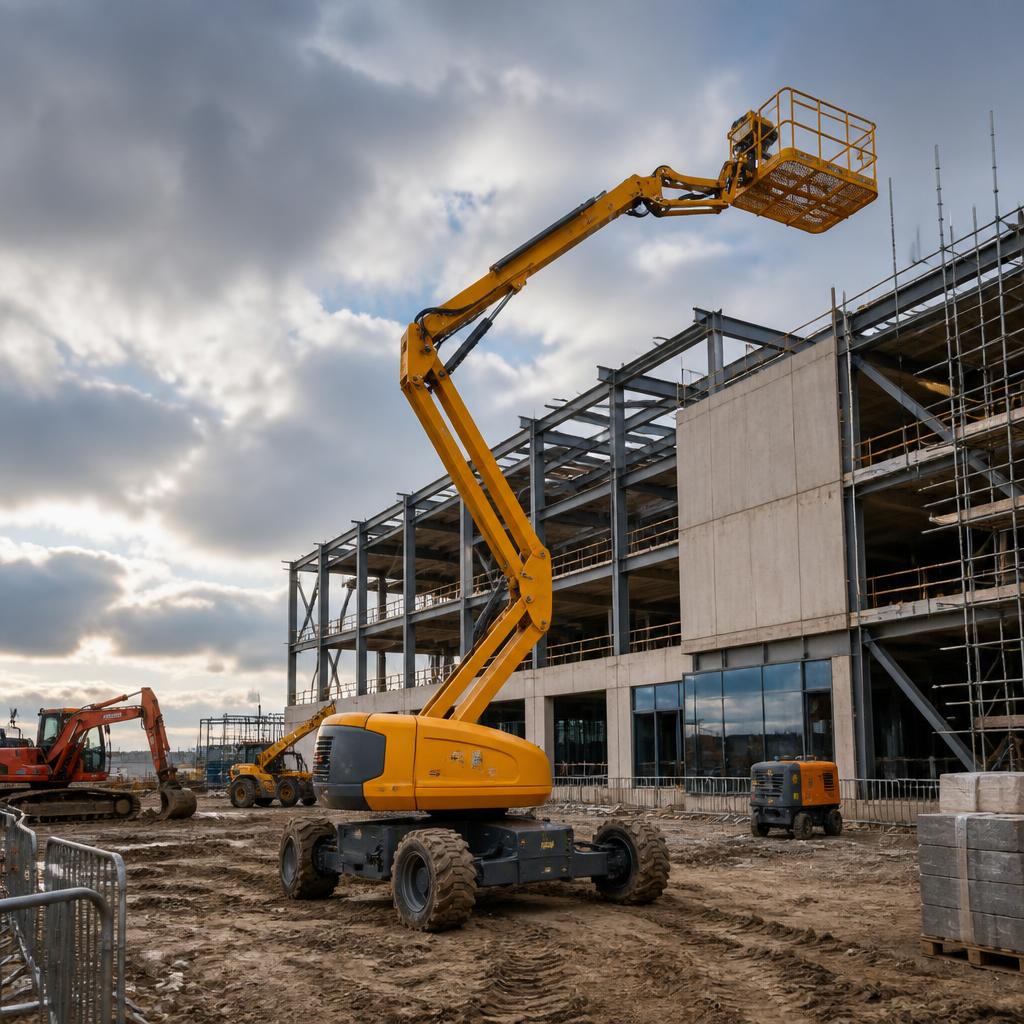
Here’s how you get moving: A step-by-step guide to starting up
Starting an AWP isn’t rocket science, but there’s a definite sequence you’ll want to follow. Skipping steps can lead to headaches, or worse, a safety incident. You’re operating heavy machinery, after all.
| Pre-Operation | Operation |
| Check fuel/power levels. | Engage emergency stop. |
| Inspect tires and outriggers. | Start the engine/motor. |
| Verify safety decals. | Disengage emergency stop. |
| Confirm guardrail integrity. | Test ground controls. |
| Test all lights and alarms. | Ascend to platform. |
| Clear the work area. | Test platform controls. |
The walk-around you honestly can’t skip
Before you even think about climbing in, do a full circle inspection. Look for anything out of place – loose hoses, flat tires, or suspicious leaks. This visual check is your first line of defense against unexpected issues and could prevent a major problem down the line.
Getting a feel for those controls without panicking
Once you’re in the basket, it’s easy to feel overwhelmed. Don’t be. Take a breath and familiarize yourself with the joystick and switches. You’ll want to understand what each control does before you attempt any movement, especially the emergency stop button.
Those joysticks aren’t as sensitive as you might think, but they do respond to subtle movements. Try a few gentle nudges with the machine still on the ground, just to get a feel for the response. You’ll find that most AWPs have proportional controls, meaning the further you push the joystick, the faster the movement. Practice with small, controlled movements to avoid any sudden lurches, which can be disorienting and even dangerous at height. And always, always make sure the area around you is clear before you initiate any movement.
My best tips for staying safe and not looking like a rookie
You’re on the platform, high above the ground, and everyone’s watching. Don’t sweat it! Here are a few pointers to keep you safe and looking like you know exactly what you’re doing.
- Always perform a pre-operation inspection – check those controls and emergency stops.
- Maintain a safe distance from power lines and obstacles.
- Never overload the platform; know your weight limits.
- Communicate clearly with your ground crew.
Assume that everyone on site is observing your safety practices.
Why your harness is your best friend
Your fall arrest system isn’t just a suggestion; it’s your lifeline. Always ensure it’s properly fitted and attached to the designated anchor point. One wrong move, and that harness is the only thing preventing a catastrophic fall. It’s there to save you, so treat it with respect.
Quick tricks for smoother operation
Operating an AWP smoothly comes down to finesse, not brute force. Practice makes perfect, but a few shortcuts can help. Feathering the controls – gently pressing and releasing – prevents jerky movements, especially when extending or retracting the boom. And always keep your work area clear of obstructions; you don’t want to snag anything while you’re moving. Another helpful trick is to always look where you’re going, not just at the controls. Use your peripheral vision to anticipate potential bumps or scrapes, especially when maneuvering in tight spaces. Short, controlled movements are always better than long, sweeping ones, particularly when you’re close to your maximum reach or working near other structures.
Final Words
You’re now equipped to approach aerial work platforms with confidence, understanding their types, benefits, and the critical safety measures involved. Making informed decisions here directly impacts your project’s efficiency and, more importantly, the well-being of your team. Stay safe out there!
FAQ
Q: What are the main types of aerial work platforms (AWPs) available for rental, and what are their primary uses?
A: You’ll typically encounter a few core types of AWPs when you’re looking to rent, each designed for specific tasks. Scissor lifts are probably the most common, offering a large, stable platform that moves straight up and down. They’re perfect for tasks requiring a lot of tools or materials, like installing drywall in a warehouse or working on building exteriors where vertical access is sufficient. You often see them indoors too, on flat, even surfaces.
Boom lifts, on the other hand, give you much more reach and flexibility. These come in two main flavors: telescopic booms (often called stick booms) and articulating booms (knuckle booms). Telescopic booms extend in a straight line, great for reaching far-off points directly, like inspecting bridges or working on high-rise facades. Articulating booms have multiple hinged sections, allowing them to maneuver up and over obstacles – think reaching over a roofline or getting into tight spots on a complex construction site.
And then there are personal man lifts, or vertical mast lifts, which are compact and lightweight. These are ideal for single-person jobs in confined spaces, like changing lightbulbs in an atrium or doing quick maintenance tasks inside a factory, where a larger machine would be overkill.
Q: What safety certifications or training should operators have before using an AWP?
The training usually covers several key areas: understanding the specific AWP you’re operating, recognizing and avoiding hazards, knowing how to conduct pre-operation inspections, and understanding the manufacturer’s operating instructions. Most rental companies will want to see proof of this certification, or they might offer training programs themselves.
It’s not a one-and-done deal either. Refresher training is often recommended, especially if there are changes in equipment types, workplace conditions, or if an operator has been observed operating unsafely. Staying current keeps everyone safe and compliant.
Q: How do environmental factors like wind, ground conditions, or overhead obstructions affect AWP operation and safety?
Environmental factors play a huge role in safe AWP operation, and ignoring them can lead to serious accidents. Wind is a big one; most AWPs have specific wind speed limits – often around 28 mph – beyond which they shouldn’t be operated. A strong gust can easily destabilize the platform, especially when you’re extended high up, so always check the forecast and have an anemometer on site.
Ground conditions are just as critical. Soft soil, uneven terrain, or slopes can all compromise stability. You need a firm, level surface for the outriggers (if your machine has them) or tires to rest on. Using proper ground mats can help distribute weight and prevent sinking on softer ground. A little pre-inspection of the work area can save you a lot of headaches – or worse.
And don’t forget about overhead obstructions. Power lines are probably the most dangerous, requiring strict minimum approach distances – a general rule of thumb is at least 10 feet for lines up to 50kV, but always check local regulations and utility guidelines. Trees, building overhangs, and even other equipment can also pose collision hazards. Always do a thorough scan of your entire work envelope – above, below, and all around – before you start lifting.


