
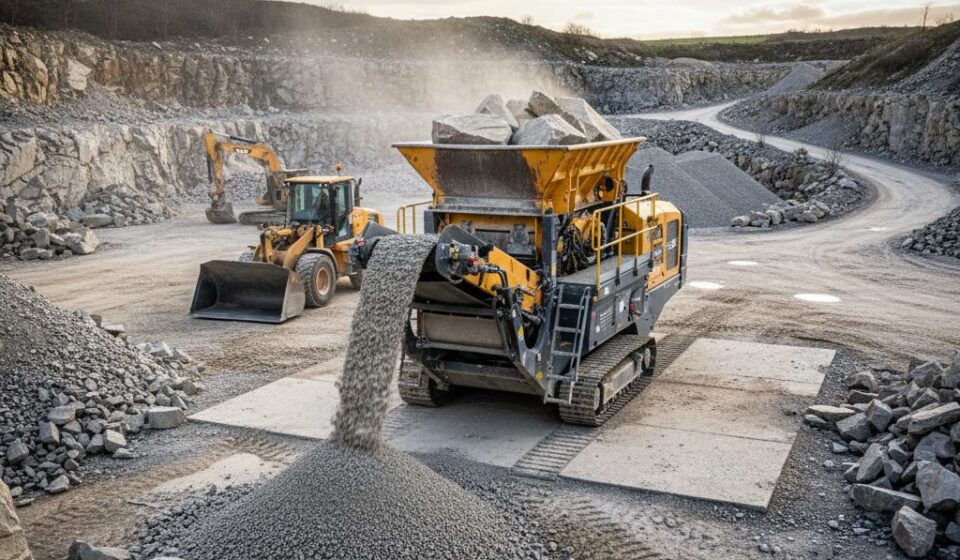

Just imagine the sheer power needed to turn massive rocks into usable aggregate – that’s where quarry crushers come in. You’re dealing with some of the heaviest machinery on earth, designed to break down incredibly tough materials. It’s a process that demands precision, efficiency, and a deep understanding of the equipment to ensure both productivity and, most importantly, safety.
Table of Contents
What’s actually out there? The main types you’ll see
You’ve got quite a few options when it comes to quarry crushers, each designed for a specific job in the quarry. Knowing the differences of these different crushing machines is key to understanding why one might be better than another for your particular material. Assume that each type excels in reducing different kinds of rock.
- Jaw crushers: The classic primary crusher.
- Cone crushers: For secondary and tertiary crushing.
- Impact crushers: Great for softer materials and producing cubical product.
| Crusher Type | Best Use Case |
| Jaw Crusher | Primary crushing of hard, abrasive rock |
| Cone Crusher | Secondary/tertiary crushing, producing finer aggregates |
| Impact Crusher (HSI) | Softer to medium-hard rock, producing cubical product |
| Impact Crusher (VSI) | High-quality cubical product, often used for sand making |
| Gyratory Crusher | Very high-capacity primary crushing, similar to large jaw crushers |
Jaw crushers and why they’re the old reliable
These are often your first line of defense against big rocks. A jaw crusher uses compressive force, literally crushing material between a fixed and a movable jaw. They’re incredibly tough and perfect for primary crushing of even the hardest, most abrasive materials. You’ll find them chewing through everything from granite to concrete.
Getting into cone and impact crushers
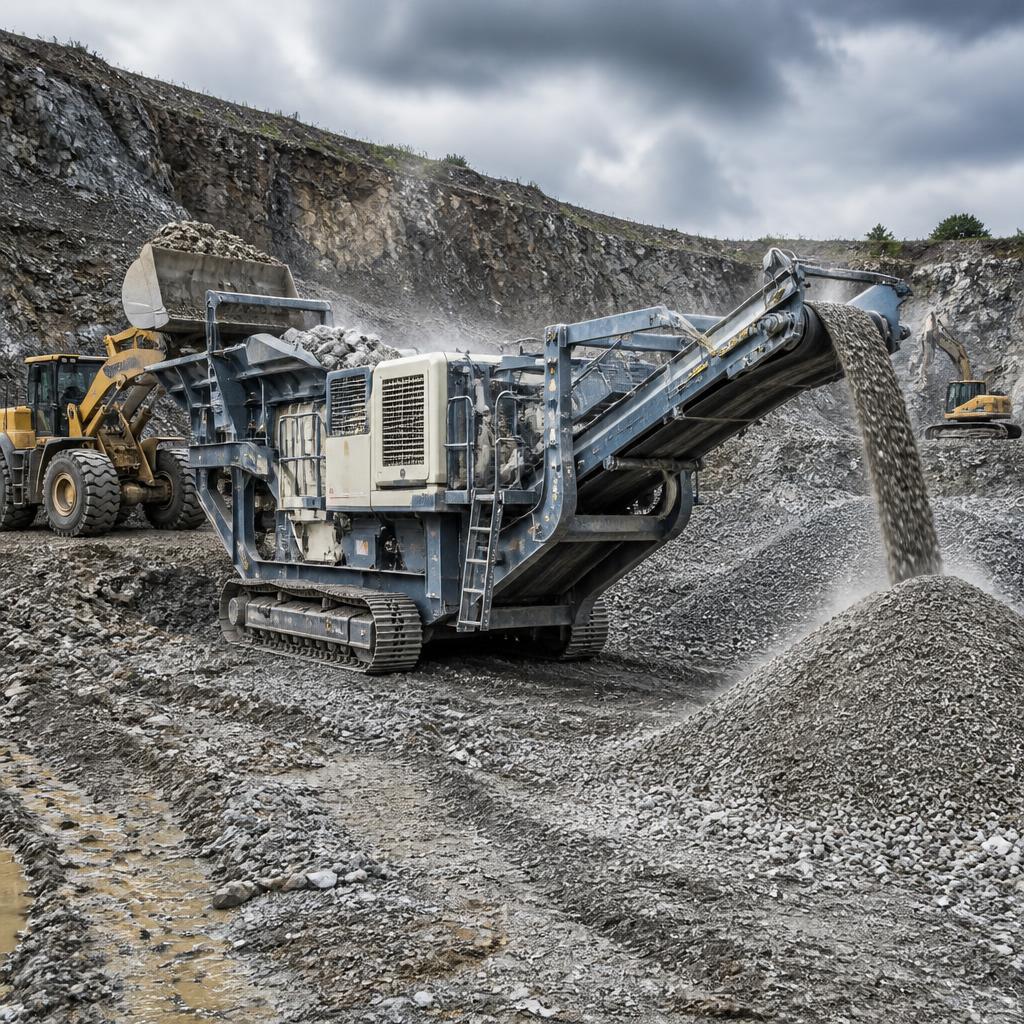
Once the jaw crusher has done its job, you’re usually looking at a cone crusher or an impact crusher for the next stages. Cone crushers, much like jaw crushers, rely on compression, but they do it in a gyrating motion that breaks down material into smaller, more uniform pieces. They’re excellent for secondary and tertiary crushing, getting your aggregates down to specification.
Impact crushers, on the other hand, use a different principle. They hit the rock with tremendous force, either by hammers on a rotor (Horizontal Shaft Impact or HSI) or by rock hitting rock in a chamber (Vertical Shaft Impact or VSI). This impact action is fantastic for producing a well-shaped, cubical product, especially with softer to medium-hard materials like limestone. But be careful – they can wear out faster if you’re feeding them extremely abrasive rock.
How do you even pick one? Here’s what matters
Picking the right quarry crusher isn’t just guesswork; it’s about matching the machine to your specific operation. You’ll need to think about what you’re crushing, how much, and what your end goal is for the material. It’s a balance of many factors, and getting it wrong can be a costly mistake.
Thinking about your rock type and size
Your material’s characteristics are paramount. Are you dealing with hard, abrasive granite or softer limestone? The crusher needs to be designed for that specific challenge, otherwise, you’ll see excessive wear and poor performance.
My take on budget versus performance
It’s tempting to go for the cheapest option, but that often leads to higher operational costs and more downtime. A slightly larger initial investment for a more efficient machine can actually save you a fortune in the long run.
Consider the total cost of ownership, not just the sticker price. This includes energy consumption, wear part replacement frequency, and maintenance demands. A crusher with a higher upfront cost but better fuel efficiency and longer-lasting components will often provide a much better return on investment over its lifespan, directly impacting your bottom line positively.
The real deal on the good and the bad
Why these machines are total game-changers
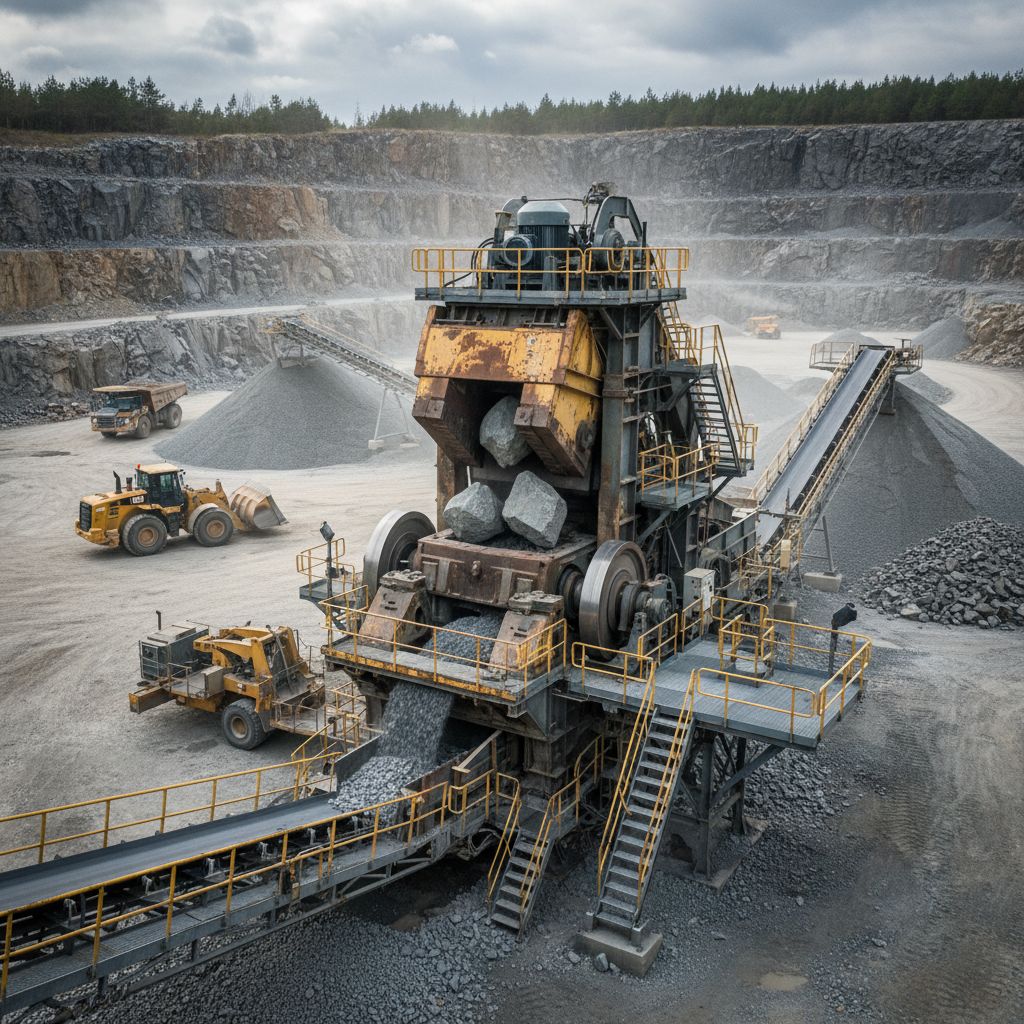
You’re looking at machines that can turn massive rocks into usable aggregate, saving you huge amounts of time and manual labor. They offer unmatched efficiency, letting you process enormous volumes of material daily.
Honestly, here are the headaches you’ll face
These aren’t set-it-and-forget-it machines. You’ll deal with intense wear and tear on components, requiring frequent checks and replacements. The sheer scale means safety is always a major concern.
Operating these behemoths requires a skilled crew; you can’t just hand the keys to anyone. Noise levels are incredibly high, and dust generation is a constant battle, often necessitating specialized suppression systems and strict environmental compliance. And don’t forget the initial investment – crushers represent a substantial capital outlay, so you really need to ensure your operational plan is solid before you buy.
So, how does this whole process actually work?
You’re probably wondering how all these massive machines actually turn big rocks into smaller, usable aggregates, right? It’s a precise dance of power and engineering, designed to break down some of the toughest materials on Earth efficiently and, most importantly, safely.
Setting things up for a smooth run
Before any crushing begins, you need to get things just right. This involves careful site preparation, making sure the feed material is ready, and that all safety protocols are firmly in place. It’s about preventing issues before they even start.
Breaking it down step-by-step
The actual crushing process involves several distinct stages, each with its own specialized equipment. You’re moving from primary reduction to finer sizing, and each step is critical for the final product.
This systematic approach ensures that the raw quarry material, often massive boulders, gets progressively reduced in size. It’s not just about brute force; it’s about controlled, sequential breakdown to meet specific aggregate specifications.
| Stage | Description |
| Primary Crushing | This is where the largest rocks first enter the system, typically handled by jaw or gyratory crushers. They reduce massive stones into more manageable sizes, often to about 6-10 inches. |
| Secondary Crushing | Next, you’ll see cone crushers or impact crushers taking over. These machines further reduce the material, often down to 1-3 inches, preparing it for final sizing or tertiary crushing. |
| Tertiary Crushing & Screening | The final stage involves fine crushing with specialized cone or VSI (Vertical Shaft Impactor) crushers, followed by vibratory screens that sort the material into precise sizes. This is where you get your finished products like gravel and sand. |
Pro tips I’ve picked up along the way
You’re putting a lot of capital into these machines, so getting the most out of them is key. I’ve learned a few things over the years that can really make a difference in your operation’s efficiency and longevity. The right approach can save you headaches and a lot of money down the line.
- Always know your material’s characteristics inside and out.
- Don’t skimp on regular inspections and maintenance.
- Invest in good wear parts; cheap ones cost more in the long run.
- Train your operators thoroughly; a skilled hand prevents many issues. The best setup in the world won’t perform if your team isn’t up to snuff.
Keeping your gear running without a meltdown
Preventative maintenance isn’t just a buzzword; it’s your best friend. You’ve got to stick to the manufacturer’s schedule for lubrication, filter changes, and wear part replacements. Ignoring a small rattle now can lead to a catastrophic failure later, and nobody wants that kind of downtime. The goal is smooth, continuous operation.
Safety stuff you seriously can’t ignore
Look, a quarry is a dangerous place, and crushers are powerful machines. You must enforce strict lockout/tagout procedures before any maintenance or inspection. Never, ever bypass safety guards or interlocks, even if it seems quicker. The smallest lapse in judgment can lead to severe injury or worse. The consequences are simply too high to take chances.
You’ll also need to ensure everyone on site wears appropriate Personal Protective Equipment (PPE), including hard hats, safety glasses, hearing protection, and steel-toed boots. Dust suppression systems are not just for air quality; they improve visibility and prevent respiratory issues for your crew. And always establish clear communication protocols, especially around moving machinery. The noise levels alone demand a robust signaling system.
What about the parts? Maintenance is actually a big deal
You’ve got your crusher humming, but what about keeping it that way? Maintenance isn’t just about fixing things when they break; it’s about making sure they don’t break in the first place. You’re looking at things like liners, screens, and bearings – they all take a beating.
Dealing with wear and tear before it breaks
Catching wear early is your best defense against unexpected downtime. You should be regularly inspecting components, looking for cracks, thinning metal, or unusual vibrations. Early detection saves you from far more expensive repairs down the line.
My secret for finding parts that don’t cost a fortune
You don’t always have to go straight to the OEM for every single part. Sometimes, aftermarket suppliers offer high-quality alternatives that perform just as well, often at a much better price.
I’ve personally found that building relationships with a few trusted aftermarket vendors pays dividends. They often specialize in specific components, like manganese liners or conveyor belts, and can provide expertise along with competitive pricing. Just make sure you’re getting parts that meet or exceed the original specifications – cutting corners here isn’t worth the risk to your expensive machinery.
Final Words
You’ve now got a solid grasp of quarry crushers, from the jaw to the cone, and how each plays its part. Choosing the right machine really boils down to understanding your material, your desired output, and the site’s specific demands.
FAQ
Q: What’s the fundamental difference between a primary and secondary crusher?
A: Primary quarry crushers are built to handle run-of-mine material straight from the quarry face. We’re talking big, sometimes enormous, rocks – material that can be upwards of a meter in size. These machines, like jaw or gyratory crushers, are designed for sheer brute force to reduce those massive pieces down to a more manageable size, usually around 10-20 cm, preparing them for the next stage.
Secondary quarry crushers, on the other hand, take that output from the primary stage and further reduce its size. They aim for a more uniform product, often cubical, which is desirable for aggregates. Cone crushers are a classic example here, refining the material to meet specific gradations for construction or other industrial uses. You wouldn’t feed a secondary crusher those gigantic rocks; it’d just clog and damage the machine.
Q: How does a jaw crusher actually break down rock?
A: A jaw crusher works by compression. It has two jaws – one fixed and one movable – forming a V-shaped crushing chamber. The movable jaw oscillates back and forth, pressing the rock against the fixed jaw. Think of it like cracking a nut with a nutcracker; the rock is squeezed until it fractures and breaks into smaller pieces. Gravity then pulls these smaller pieces further down the chamber until they’re small enough to pass through the gap at the bottom, called the closed side setting (CSS).
Q: What are the main benefits of using an impact crusher for aggregate production?
A: Impact crushers are fantastic for producing high-quality, cubical aggregate, which is often preferred for asphalt and concrete mixes because it offers better interlocking properties. They break rock by impact rather than just compression. Material enters the crusher and is struck by rapidly rotating hammers or impellers, throwing it against impact plates within the chamber. This action causes the rock to fracture along its natural cleavage planes, resulting in a well-shaped product with fewer flaky or elongated pieces. They’re also quite versatile and can handle a range of materials, including softer limestones and even some harder rocks.
Q: Can quarry crushers really handle abrasive materials like granite or basalt without excessive wear?
A: Yes, they can, but it absolutely requires specific design considerations and diligent maintenance. When you’re crushing highly abrasive materials like granite or basalt, wear is a major concern. Manufacturers address this by using specialized wear parts made from manganese steel or chrome alloys, which are much harder and more resistant to abrasion. For instance, jaw plates, concaves in cone crushers, and blow bars in impact crushers will be made from these tougher materials. You’ll also find that machines designed for abrasive rock often have thicker liners and more robust construction overall to withstand the constant grinding and impact. Regular inspection and timely replacement of these wear parts become even more critical to maintain efficiency and avoid costly breakdowns.
Q: What role does screening play in a typical quarry crushing circuit?
A: Screening is absolutely important; it’s the quality control department of your crushing operation, really. After material leaves a crusher, it’s a mix of different sizes. Screens separate this mixed material into specific size fractions. For example, a vibrating screen might have multiple decks, each with a different mesh size. The smallest material falls through the top deck, slightly larger through the next, and so on. This process ensures that the final product meets the exact specifications required by customers, whether it’s for road base, concrete aggregate, or specialty sand. It also prevents oversized material from moving to the next crushing stage, which would reduce efficiency and potentially damage finer crushers. Proper screening maximizes the value of your quarry output.


