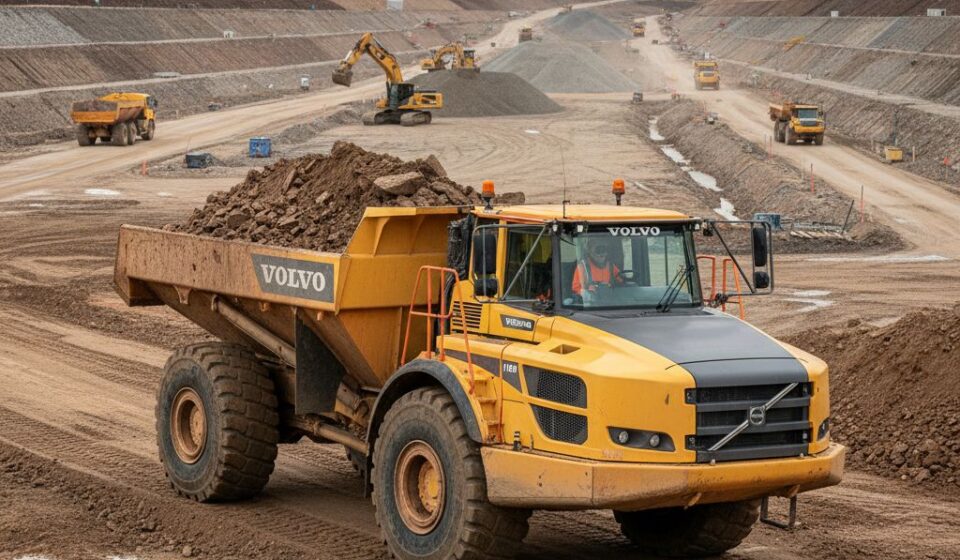

If you’re in the market for Articulated Dump Trucks, let’s get down to it. You’re probably wondering why you’d pick an ADT over other options. Well, they really shine in specific conditions, offering some serious advantages, but they do come with their own set of trade-offs. It’s about finding the right tool for the job, after all.
Table of Contents
Why I think they’re better than rigid trucks
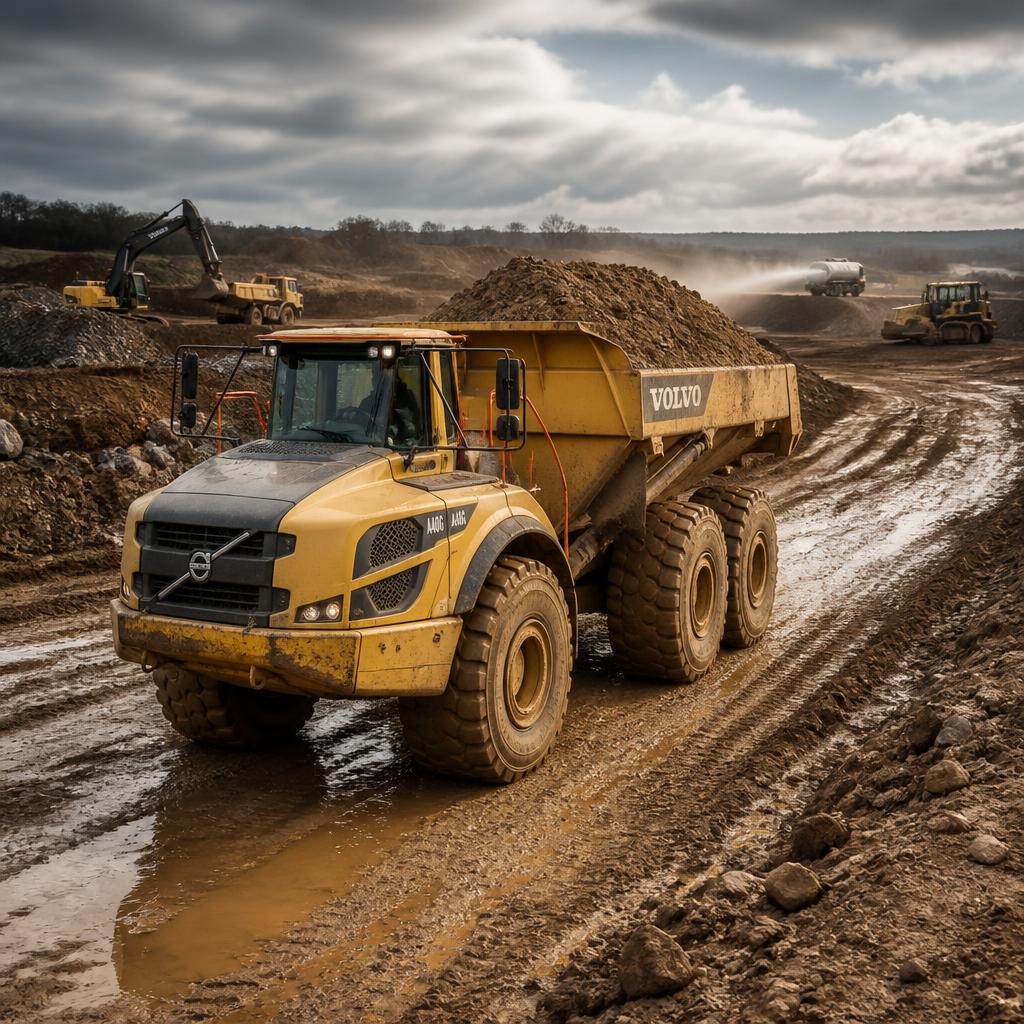
They’re unmatched for tough terrain. You’ll find their articulated steering and all-wheel drive let you haul material over muddy, uneven ground where rigid trucks simply can’t go. This flexibility saves you time and money on challenging sites.
The honest truth about the downsides
But, they’re not perfect. You’ll notice they have a higher initial cost and can be less fuel-efficient on long, paved hauls compared to their rigid counterparts. Maintenance can also be a bit more complex due to the articulated joint. Operating an ADT also demands a certain skill set from your operators. The articulation means a different feel when driving, especially when reversing or maneuvering in tight spaces. You’ll also likely find that their top speed is lower than a rigid dump truck’s on flat, well-maintained roads, which can impact cycle times if your project has long haul distances over easy terrain.
What Factors Actually Matter When You’re Picking One?
Picking the right articulated dump truck isn’t just about size; it’s about matching the machine to your specific needs. You’ll want to consider everything from the terrain and payload capacity to driver comfort and cutting-edge tech. This ensures maximum efficiency and safety on your job site.
- Payload Capacity: How much material do you need to move?
- Terrain: Will you be on steep grades, muddy ground, or smooth surfaces?
- Engine Power: Does it have enough grunt for your heaviest loads and toughest climbs?
- Operator Comfort and Safety: A happy driver is a productive driver, and a safe one is non-negotiable.
- Technology Features: Modern ADTs come with some pretty smart systems.
Thinking about the terrain and your payload
You’re not just moving dirt; you’re moving it across specific conditions. Consider the steepest grades and the softest ground your truck will encounter. And what about the material itself? Is it dense rock or lighter aggregate? This dictates the payload capacity you truly need.
Don’t forget about the tech and cab comfort
A long day in the cab can be grueling, so don’t underestimate the impact of a comfortable and ergonomic workspace. Modern trucks offer a lot more than just a seat and a steering wheel. This directly impacts operator fatigue and productivity.
Many contemporary ADTs now come equipped with advanced telematics systems, letting you monitor performance, fuel consumption, and even predict maintenance needs from afar. You’ll also find features like automatic traction control, payload management systems, and even heated, air-suspended seats that make a massive difference over an eight-hour shift. These aren’t just luxuries; they’re tools that enhance operational efficiency and significantly improve job site safety.
Getting It Moving: A Step-By-Step Guide
So, you’re in the cab, engine purring. Now what? Getting one of these beasts to do your bidding isn’t rocket science, but it does require a methodical approach. You’ll want to make sure you’re doing things in the right order to keep yourself and everyone around you safe.
| Step | Action |
|---|---|
| 1. Pre-Operation Check | Before you even think about starting, walk around the truck. Check tire pressure, fluid levels, and look for any visible damage or leaks. Make sure all lights and signals are working. |
| 2. Enter the Cab Safely | Always use the three points of contact rule when climbing into the cab – two hands and one foot, or two feet and one hand. Don’t jump in or out. |
| 3. Adjust Your Setup | Once inside, adjust your seat, mirrors, and steering wheel for optimal comfort and visibility. Fasten your seatbelt – it’s not just a suggestion, it’s a lifesaver. |
| 4. Start the Engine | Follow the manufacturer’s specific starting procedure. Usually, this involves turning the key and letting the engine warm up for a few minutes. Check all gauges to ensure everything is in the green. |
| 5. Release Brakes and Select Gear | Disengage the parking brake and select the appropriate gear for your intended direction of travel. Always start slow. |
| 6. Communicate Intent | If you’re on a busy site, use your horn or radio to let others know you’re about to move. Situational awareness is key to preventing accidents. |
| 7. Smooth Acceleration | Gently press the accelerator. Avoid sudden movements, especially when the truck is loaded. Articulated dump trucks are powerful, but they need a smooth touch. |
How to handle that pivot point like a pro
That articulation joint is what makes these trucks so agile, but it also adds a layer of complexity. When turning, remember the front and rear sections move independently. You’ll need to account for the swing of the rear unit, especially in tight spaces or near obstacles. Practice makes perfect here, so take it slow.
Dumping your load without making a mess
Getting rid of your material efficiently and safely is the final act for each cycle. You don’t want to leave a trail or, worse, tip the whole rig. Approach the dumping area slowly and deliberately, always eyeing your surroundings for hazards and personnel.
Once you’re in position, engage the parking brake and ensure the area behind you is clear. Then, slowly raise the dump body using the hydraulic controls. Watch the material as it slides out; sometimes a slight forward or backward jog can help stubborn loads. Lower the bed completely before moving, and give the area a quick scan for any residual material or potential issues before you drive off. Never dump on an incline that’s too steep, as this significantly increases the risk of a rollover.
My Best Tips To Keep Things Running Smoothly
Keeping your articulated dump truck (ADT) in top shape isn’t just about avoiding breakdowns; it’s about maximizing efficiency and safety. You’ll want to focus on a few key areas to keep that dirt moving. Though, don’t forget that preventive maintenance is your best friend here.
- Always conduct pre-operation checks.
- Stick to the manufacturer’s service schedule.
- Train your operators thoroughly on proper techniques.
Seriously, don’t skip your daily checks
Every single day, before that engine even sputters to life, you need to perform a thorough walk-around. Look for anything out of place: leaks, loose hoses, or tire damage. This brief routine can catch small problems before they become major, costly failures.
How to save some cash on fuel and tires
Fuel and tires are probably two of your biggest operating expenses, right? So, getting smart about how you manage them can put some serious money back in your pocket. It’s all about a combination of good habits and smart choices.
One of the easiest ways to burn through fuel is aggressive driving. Teach your operators to accelerate smoothly, anticipate stops, and avoid unnecessary idling. Even small changes in driving style can lead to significant savings over time. For tires, maintaining correct pressure is non-negotiable; under-inflated tires wear out faster and gobble more fuel, so check those pressures daily for optimal performance and longevity.
Summing up
You’ve seen that choosing an articulated dump truck really depends on your specific site conditions and project demands. You’ll want to consider everything from payload capacity to terrain type to ensure you’re getting the most efficient and cost-effective machine for the job.
FAQ
Q: What exactly is an Articulated Dump Truck (ADT) and how does it differ from a rigid dump truck?
A: An Articulated Dump Truck, or ADT, is a heavy-duty off-road haulage vehicle designed to transport bulk materials like sand, gravel, rock, and overburden. The key differentiator is its ‘articulated’ chassis, which means it has a hinge-like pivot point between the cab and the dump body. This articulation allows the front and rear sections to move independently, giving it superior maneuverability and traction in rough, uneven terrain compared to a rigid dump truck. Think of it like a train with a flexible coupling – it can bend and twist over obstacles.
Rigid dump trucks, on the other hand, have a single, fixed frame. They’re generally larger and used in more stable environments, such as large-scale mining operations or well-maintained haul roads where their higher speed and carrying capacity can be fully utilized. They don’t handle mud or steep, slippery slopes nearly as well as an ADT does.
Q: What are the typical applications where ADTs truly shine?
A: ADTs really come into their own on construction sites with challenging ground conditions. You’ll often see them in action on large infrastructure projects – highway construction, dam building, or even major commercial developments where the ground is soft, muddy, or extremely uneven. They’re also a staple in quarrying and mining operations, especially for hauling material from the pit to processing plants over difficult, unpaved routes.
Their ability to tackle steep grades and maintain traction in adverse weather conditions makes them indispensable in places where other haulage equipment would simply get stuck or struggle. Consider a new housing development site after a week of heavy rain; an ADT will likely be the only truck still moving material efficiently.
Q: What kind of maintenance is most critical for ensuring an ADT’s longevity and performance?
A: Regular, preventive maintenance is absolutely non-negotiable for an ADT. Given the harsh environments they operate in, frequent checks of fluid levels – engine oil, hydraulic fluid, coolant – are paramount. The articulation joint itself requires particular attention; it’s a high-stress point and needs regular greasing and inspection for wear.
Tire pressure and condition are also crucial, as improper inflation can lead to uneven wear and reduced traction, not to mention a higher risk of blowouts. And, of course, keeping an eye on the brakes, steering system, and suspension components will help catch potential issues before they become costly breakdowns, ensuring the truck remains safe and operational.
Q: How does an ADT’s load capacity typically range, and what factors influence it?
A: ADT load capacities can vary quite a bit, generally ranging from about 25 to 60 tons, sometimes even a little more for the largest models. The specific capacity depends on several factors, including the manufacturer’s design, the engine horsepower, and the overall structural integrity of the chassis and dump body.
You’ll find smaller units that are perfect for tight urban construction sites, while the biggest beasts are designed for massive earthmoving tasks in quarries or large-scale civil engineering projects. Always match the truck’s capacity to the material density and the project’s haul requirements to maximize efficiency and avoid overloading.
Q: Are there specific safety considerations unique to operating an Articulated Dump Truck?
A: Operating an ADT definitely comes with its own set of safety considerations. Due to their articulated nature, operators need to be particularly aware of the ‘swing’ of the dump body when turning, especially in confined spaces. The center of gravity can also shift significantly when hauling a load over uneven ground, so operators must be skilled in recognizing and reacting to potential rollovers.
Visibility can be an issue, especially to the rear, so modern ADTs often incorporate multiple cameras and advanced proximity sensors. Proper training on steep grades, understanding braking distances with heavy loads, and always maintaining a safe distance from other equipment and personnel are all imperative for preventing accidents on the job site.