Transporting Plant Machinery Safely and Legally in the UK

Moving and transporting plant machinery between sites may seem simple, but the reality involves strict regulations, weight limits, securing standards, escort rules, and legal obligations. Whether you’re relocating a compact 1.5‑tonne mini digger or a 30‑tonne tracked excavator, the same rule applies: plant machinery cannot be driven on public roads like standard vehicles. Incorrect transport can lead to serious legal and safety consequences.
This guide explains how to move plant machinery correctly, safely, and in full compliance with UK regulations.
Table of Contents
Why Plant Machinery Cannot Be Driven on Public Roads
Most plant equipment is not designed or approved for road use. Key reasons include:
Weight Limits
Even mid‑range excavators exceed standard axle weight limits. UK road limits are 10,000kg for non‑driving axles and 11,500kg for driving axles. A loaded plant trailer often surpasses these thresholds.
Speed Restrictions
Plant machinery is built for site work, not road travel. Typical travel speeds of 5–20 km/h make road use impractical and dangerous.
Road Surface Damage
Steel tracks on dozers and excavators can severely damage tarmac. Even rubber tracks cause excessive wear over distance.
Legal Compliance
Driving plant machinery on public roads without proper permits, lighting, insurance, and documentation is illegal and can result in fines, prosecution, and invalidated insurance.
The correct method is always to load the machine onto a suitable trailer or low loader and transport it using a licensed HGV.
Choosing the Correct Transport Method
Low Loader Trailers
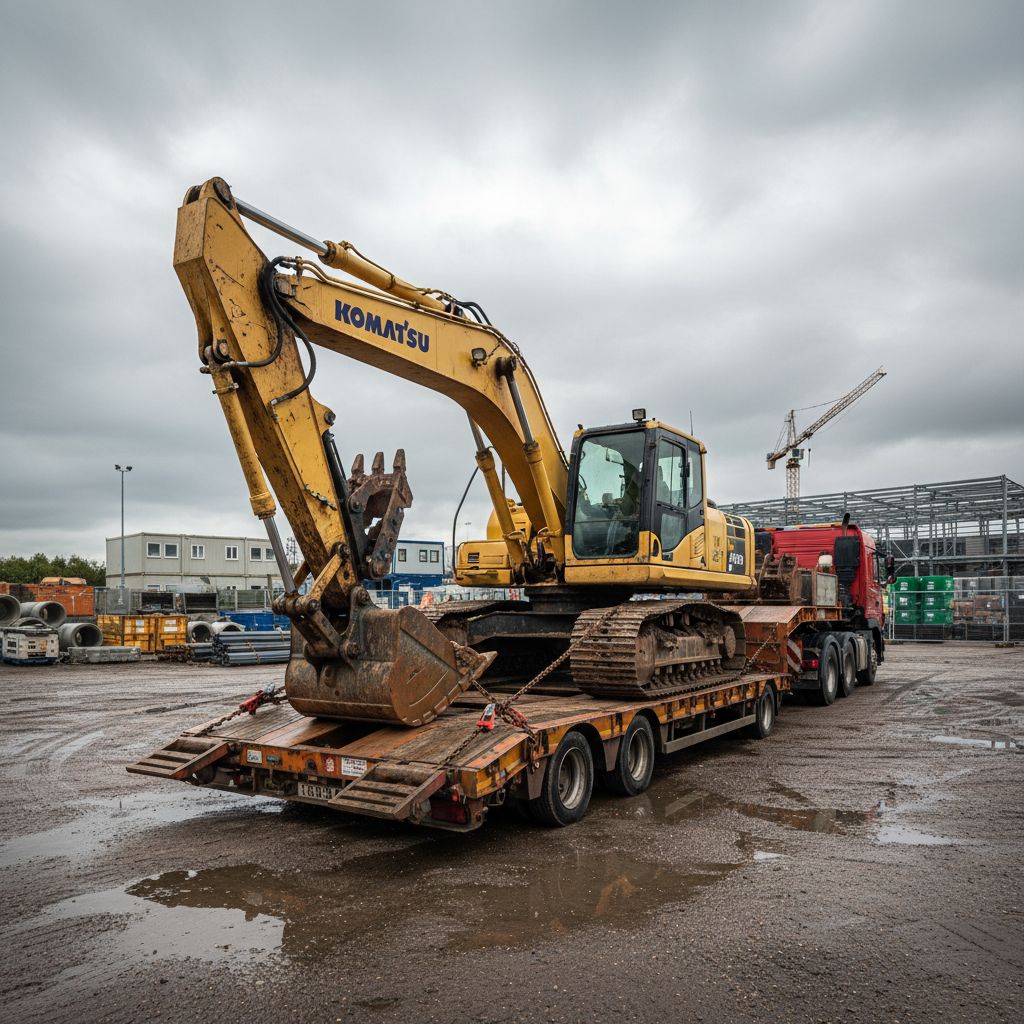
Low loaders are the standard choice for most plant machinery. Their low bed height (typically 450–600mm) provides additional clearance under bridges and height restrictions. They come in fixed‑bed, drop‑deck, and extendable versions.
Typical configurations include:
- 2‑axle step frame – suitable for machines up to around 15–18 tonnes
- 3‑axle low loader – ideal for 20–35 tonne machines
- 4‑axle or multi‑axle trailers – used for heavier or oversized equipment
Plant Trailers (Beavertail)
For lighter machines up to roughly 10 tonnes, beavertail trailers are cost‑effective and practical. They feature a rear ramp for easy loading and can be towed by a suitable 4×4 or commercial vehicle, depending on weight ratings.
Roll‑On Roll‑Off (RoRo)
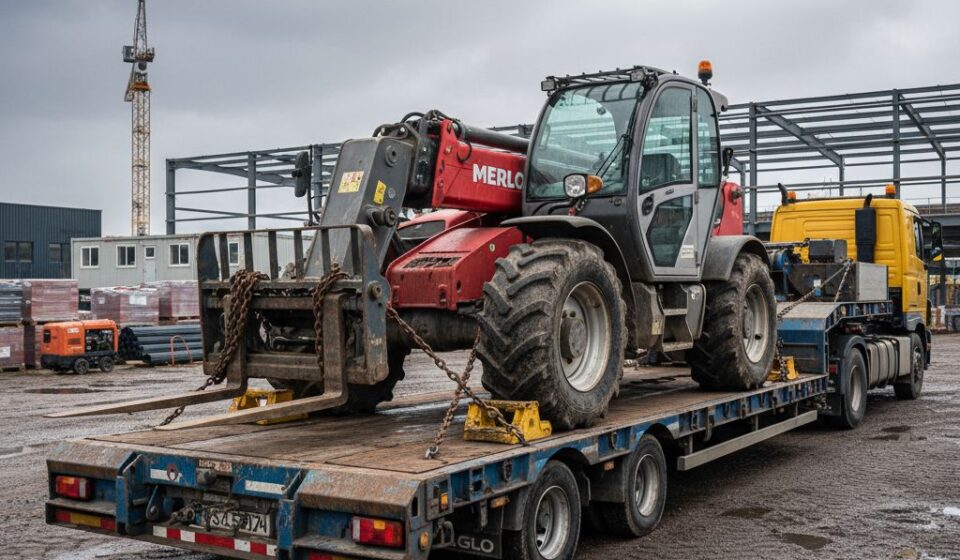
Wheeled plant such as telehandlers, rough‑terrain forklifts, and wheeled loaders can often be driven onto the trailer using ramps. This method is quick and efficient when handled by a competent operator.
Specialist Abnormal Load Transport
Large crawler excavators, cranes, and heavy dump trucks require specialist abnormal load transport. This involves multi‑axle trailers, route surveys, permits, and sometimes police escorts.
Understanding STGO and Abnormal Load Requirements
The Special Types General Order (STGO) governs the movement of heavy or oversized loads in the UK.
STGO Categories
- Category 1: 44,001–80,000kg. Requires police and highway authority notification (minimum 5 clear days).
- Category 2: 80,001–150,000kg. Requires VR1 authorisation plus police notification.
- Category 3: Above 150,000kg. Requires full VR1 permit and police authorisation.
When Permits Are Required
A permit is needed if the vehicle exceeds the standard 44,000kg gross weight limit. Axle weights must also comply with legal limits. Exceeding these triggers STGO classification and mandatory notifications.
Most standard plant moves (e.g., a 20‑tonne excavator on a 3‑axle low loader) fall within the 44‑tonne limit, though correct axle distribution remains essential.
Width Restrictions and Escort Requirements
- Loads over 5.0m wide or 30m long require a police escort.
- Loads over 3.0m wide require at least two working days’ notice to police.
- Private escort vehicles are commonly used for loads between 3.0m and 5.0m wide.
Securing Plant Machinery for Transport
Correct load securing is legally required and critical for safety.
Lashing and Chain Requirements
Restraints must provide at least 50% of the machine’s weight in each direction. For a 20‑tonne excavator, this means a minimum of 10 tonnes of restraint forward, rearward, and laterally.
Key steps include:
- Use manufacturer‑approved lashing points
- Cross chains or straps where possible
- Re‑check tension after the first mile and periodically
- Lower booms, blades, and attachments
- Engage travel locks
- Secure or remove loose accessories
Lighting and Marker Boards
Loads overhanging the trailer by more than 1 metre require marker boards and lighting. Loads wider than 2.9 metres require side markers.
Route Planning Essentials
Before moving plant machinery, check:
- Bridge weight limits – some rural bridges cannot support heavy low loaders
- Height restrictions – know your loaded height and add a safety margin
- Road width and turning space – narrow lanes may be impassable
- Road surface quality – heavy loads can damage lightly surfaced tracks
- Time restrictions – some authorities limit abnormal load movements during peak hours
Driver Qualifications and Vehicle Requirements
Licence Categories
- C+E – required for towing heavy trailers behind HGVs
- B+E – suitable for lighter plant trailers under 8,250kg MAM
Required Documentation
Drivers must carry:
- Driving licence
- Vehicle registration documents
- Insurance certificate
- Trailer test certificate
- STGO permits (if applicable)
- Load documentation including weight and dimensions
Insurance Considerations
Standard commercial vehicle insurance may not cover plant machinery in transit. Confirm:
- The machine is insured during transport
- The trailer and towing vehicle are covered for the load
- STGO requirements are met
If using a third‑party haulier, ensure they have goods‑in‑transit insurance covering the machine’s full value.
Using a Specialist Plant Haulier
For anything beyond simple local moves, specialist hauliers provide:
- Correct trailer selection
- Permit handling
- Route surveys
- Escort arrangements
- Professional loading and securing
- Appropriate insurance
Costs vary widely depending on distance, weight, and complexity.
Quick Reference: Transport Rules by Machine Weight
| Machine Weight | Typical Trailer | STGO Required? | Police Escort? |
|---|---|---|---|
| Up to 3.5t | Plant trailer / beavertail | No | No |
| 3.5–10t | Beavertail / step frame | No (if within 44t GVW) | No |
| 10–20t | 2/3‑axle low loader | Check GVW | Only if >3m wide |
| 20–35t | 3‑axle low loader | Check GVW | Only if >3m wide |
| 35t+ | Multi‑axle / specialist | Usually yes | Depends on dimensions |
| Any >3.0m width | Low loader | Notify police | Yes (2 days’ notice) |
| Any >5.0m width | Specialist | Yes | Mandatory police escort |
FAQs
How do I know if my plant move requires an STGO permit?
You need an STGO permit if your total vehicle and load weight exceeds 44 tonnes or if axle weights exceed legal limits. Always calculate the full combination weight before planning transport.
Can I move tracked machinery without damaging the road?
Steel‑tracked machines should never be driven on public roads. They must be transported on a trailer or low loader to avoid severe road surface damage and legal penalties.
Do I need an escort vehicle for wide loads?
Loads over 3.0 metres wide require police notification. Loads over 5.0 metres wide require a mandatory police escort. Private escort vehicles are often used for loads between 3.0 and 5.0 metres.